Latest post from this blog

How to Manage Test Execution Across Different Browsers and Environments (QA, UAT, Staging)

In real-time automation projects, test execution is never limited to a single browser or a single environment . Applications must be validated across multiple browsers (Chrome, Firefox, Edge) and multiple environments such as QA, UAT, and Staging before going live. A well-designed Selenium + Java + Cucumber automation framework should allow testers to switch browsers and environments easily without changing test scripts . This blog explains how to manage test execution efficiently across different browsers and environments using best practices followed in real projects. Why Multi-Browser and Multi-Environment Testing Is Important Different users use different browsers QA, UAT, and Staging environments have different configurations Bugs may appear only in specific environments or browsers Same test cases must be validated everywhere before production release Common Challenges Testers Face Hardcoded browser names and URLs Maintaining separate test scripts for each environment Browse...

Locating Strategies in Selenium WebDriver

Introduction 
In Selenium WebDriver, locators are used to identify elements on a webpage. The findElement() to find a single element and findElements() to find multiple elements. 
There are multiple ways to uniquely identify a web element within the web page such as ID, 
CSS SelectorXPATH, Name, Class Name, Tag Name, Link Text, And Partial Link Text.

FindElement(): 
method returns a single element or throws an exception if none is found. 

Syntax 
WebElement elementName = driver.findElement(By.LocatorStrategy("ValueOfLocators"));

Below are some examples of Locator Strategy
1. Id: Finds elements with an Id attribute that includes the specified value.

WebElement elementId = driver.findElement(By.id("header_block")); 

2. CSS Selector:
Locates elements matching a CSS selector.

WebElement elementSelector =driver.findElement(By.cssSelector("input[type='submit']")); 

3. Xpath: Locates elements matching an Xpath expression.

WebElement elementXpath =driver.findElement(By.xpath("//input[@type='submit']")); 

4. Name: Finds elements with a name attribute that includes the specified value.

WebElement elementName =driver.findElement(By.name("nameValue")); 

5. ClassName: Finds elements with a class name attribute that includes the specified value.

WebElement elementClassName =driver.findElement(By.className ("classValue")); 

6. TagName: Select elements by their HTML tag.

WebElement elementTagName =driver.findElement(By.tagName ("html tagName"));

7. LinkText: Finds links by their exact text.

WebElement elementLinkText =driver.findElement(By.linkText ("Text in the Link")); 

8. Partial LinkText: Locates anchor elements whose visible text contains the search values. If multiple elements are matching, only the first one will be selected.

WebElement elementPartialLinkText = driver.findElement(By.partialLinkText ("Partial Text in the Link"));

findElements(): method returns a list of matching elements, or an empty list if none are found.

Syntax
List<WebElement> listOfElements = driver.findElements(By.xpath("//div"));

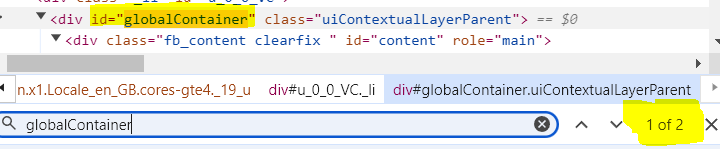
Below are some examples of ID

List<WebElement> elements = driver.findElements(By.id("globalContainer"))

Comments

Popular posts from this blog

How to Manage Test Execution Across Different Browsers and Environments (QA, UAT, Staging)

Purpose of the StepData Class in Selenium + Java Cucumber Automation Framework

Ensuring Thread Safety in Parallel Test Execution with Selenium, Cucumber, and Java